Can You Prove You’re Compliant? Notes from the 2026 UAC Annual Convention
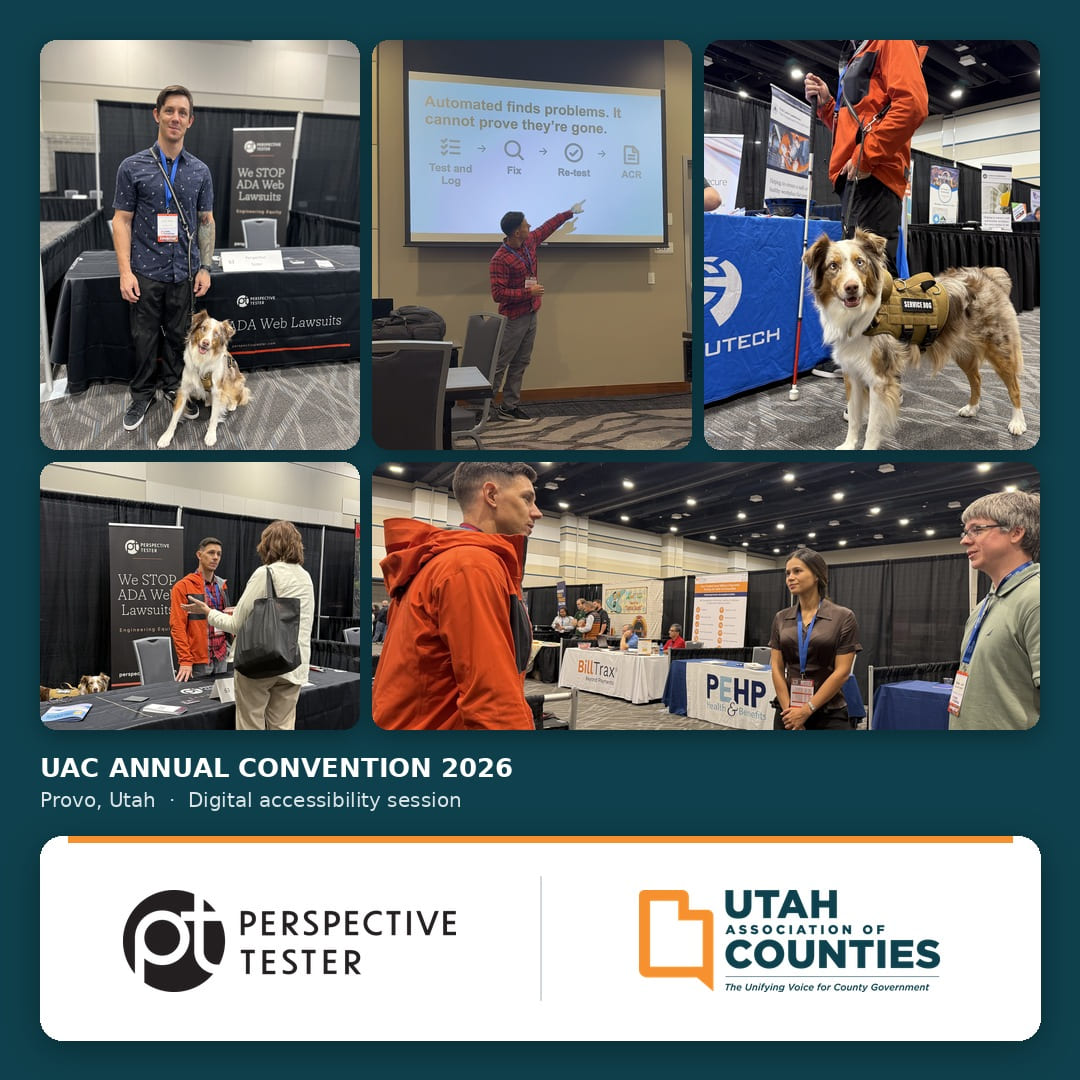
Last week, we exhibited at the Utah Association of Counties Annual Convention (opens in a new tab) in Provo. We spent three days talking with county officials and IT staff from across the state, and we were given a few minutes in front of the county IT directors. Thank you to UAC for hosting us, and to everyone who stopped by the booth to say hello to Ember.
Here is what we shared with the IT directors.
Automated tools find problems. It cannot prove they’re gone.
Automated accessibility scanners are a common part of a county’s toolkit, and for good reason. They cover a lot of pages quickly, they are consistent, they catch mechanical errors fast, and they flag regressions when something breaks after an update.
The DOJ’s Title II web rule sets a standard, WCAG 2.1 AA. It does not set a method. Many of the criteria in that standard require a human to judge them, things like keyboard focus, whether the reading order makes sense, or whether a link’s text actually tells you where it goes. A scanner cannot evaluate those.
A scan produces a list of the errors it was built to detect, on the pages it was pointed at, on the day it ran. That list helps you find and fix the low-hanging fruit. It is not evidence that the site meets the standard, and if a complaint or an audit comes after the deadline, evidence is what will be asked for.
What proof looks like
Proof is a record. It starts with a test plan and logged findings. Each finding gets fixed, then re-tested to confirm the fix holds. The results are documented in an Accessibility Conformance Report, or ACR, which shows criterion by criterion how the site was tested and where it stands.
Why it matters now
Under the rule, counties serving 50,000 or more people must meet WCAG 2.1 AA by April 26, 2027. Counties under 50,000 have until April 26, 2028. Testing, fixing, and re-testing a full website and its documents takes time and expertise, and you need to know whether these fixes were implemented correctly.
How we can help
We bridge automated scanning and actual compliance. Our certified testers do the manual work scanners cannot, and we produce the record showing the work was done.
We are proud to be working alongside Utah counties as they prepare for Title II, and we look forward to seeing everyone again next year.